Sports Coaching & Player Development Platform for Federations
By Arpan Desai, Founder, SportsFirst
A federation-wide digital coaching platform for distributing curriculum, video skills and drills, season plans and player-development pathways — based on a production platform SportsFirst built with Six Degree Sports and already in use within USA Youth and High School Rugby.
- Theme
- Coaching & training
- Relevant to
- Federation / governing body, Academy & youth, Professional club, Collegiate athletics, League office
A proposal from SportsFirst. Unlike most cards in this catalog, this one does not start from a blank page: SportsFirst built the coaching curriculum and player-development platform for Six Degree Sports, which is in use by American Youth and High School Rugby and by New South Wales Rugby. What is proposed here is applying that product pattern to another sport, federation or player pathway. Scope, reuse and outcomes would still be agreed through discovery and a live pilot.
1. The Opportunity
Most sports organisations already know how they want their sport coached.
A federation typically holds a national coaching philosophy, age-specific development principles, coach education material, skills and drill libraries, session plans, season frameworks, technical video, high-performance pathways, continuing professional development content and player-development standards.
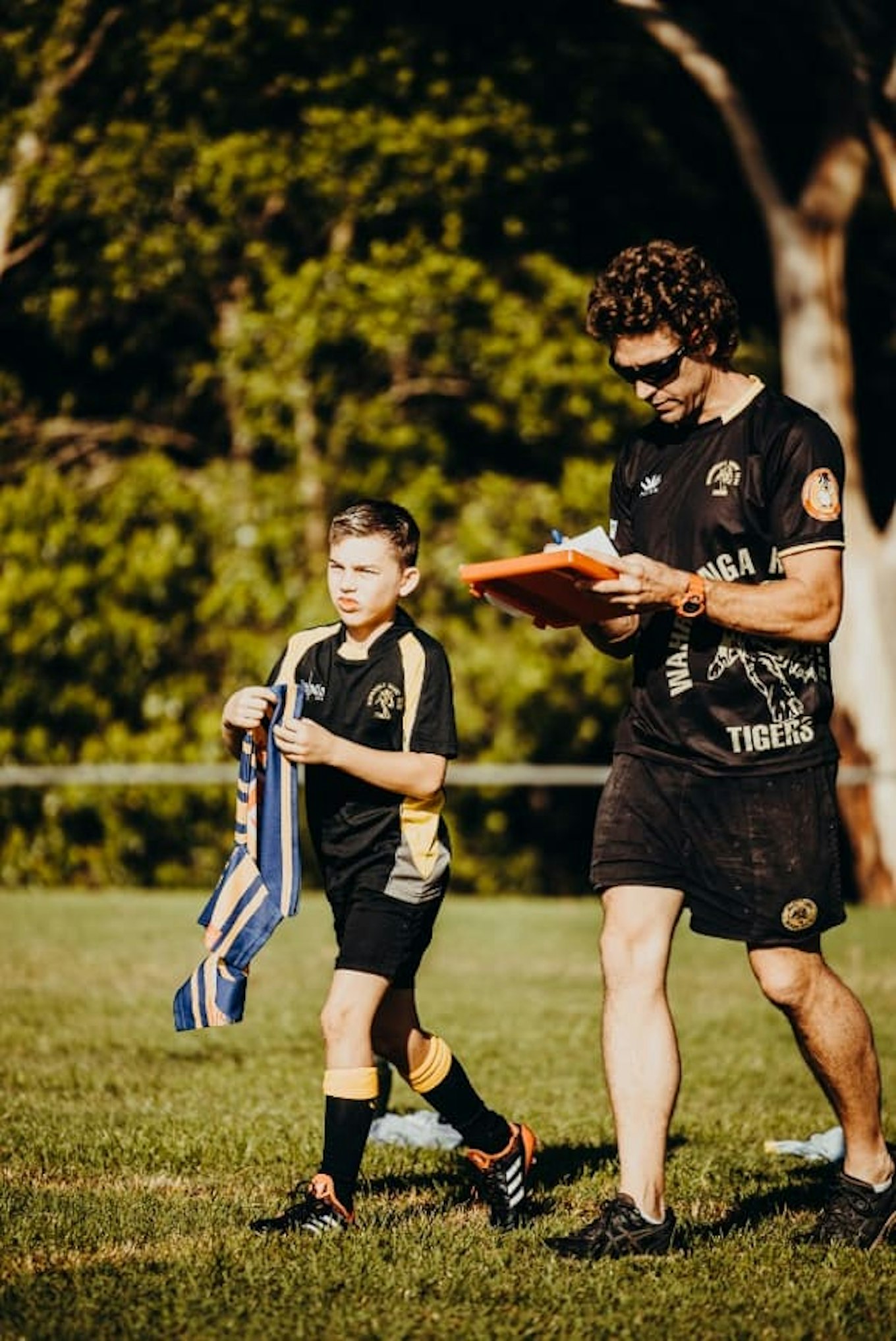
The problem is distribution. That material usually sits across PDFs, slide decks, coach education courses, shared drives, video links, spreadsheets and individual coaches' heads. A governing body can publish a coaching framework and still not have answered the question a volunteer coach is asking at six o'clock on a Tuesday: what do I run tonight with fourteen under-14s and one pitch?
At grassroots level the recurring questions are practical. What should I coach this week? What does this drill actually look like? How do I adapt it for this age group? How does tonight connect to the rest of the season?
At the other end of the pathway the questions are different but no easier. What should this athlete work on between camps? Has the assigned programme been completed? Can national coaches stay involved with a player who trains four hundred miles away?
The opportunity is not another drill library. It is the digital delivery layer for a sport's coaching and player-development system.
2. What We Propose to Build, With You
A configurable coaching and player-development platform that turns a federation's coaching intellectual property into something a coach uses every week.
The organisation defines its own curriculum, age-group structure, skills framework, drill and activity library, games library, seasonal training plans, session templates, video instruction, coach-development content, athlete pathways and high-performance programmes.
Coaches sign in, identify the teams and age groups they work with, and see material relevant to them rather than an undifferentiated library. They can follow a federation season plan, watch video demonstrations, build or adapt a session and take that session to the field on a phone.
Where the organisation wants deeper athlete development, players receive assigned skills, video instruction and remote programmes between face-to-face sessions.
The product becomes one digital layer connecting federation, coach developer, club, coach and athlete.
The platform can operate at three connected levels:
- Federation level. Coaching philosophy, development framework, curriculum, skill categories, age-group progressions, approved activities, coach education, seasonal structure and content standards. This is where the governing body controls what counts as official.
- Coach and club level. Access the curriculum, follow a season plan, browse skills and activities, watch instructional video, build and modify sessions, save favourites, reuse previous sessions, share approved content with players and work across more than one team.
- Athlete level. Assigned skills exercises and activities, video demonstrations, remote development programmes, coach feedback and a visible development pathway.
3. Why This Problem, Why Now
Publishing is not distribution
A framework document is evidence that the thinking has been done. It is not evidence that the thinking reached a pitch. Most federations can describe their coaching philosophy and cannot say how many coaches used it last month, in which regions, or for which age groups. That gap is a measurement problem before it is a technology problem, and it is the gap this platform closes.
The coach network is mostly volunteers
At grassroots level the person delivering the sport is usually unpaid, time-poor and not a specialist coach. Material that requires reading a forty-page document to extract one session will not be used. Material that answers "what do I run tonight" in ninety seconds will be. The design constraint is the Tuesday evening, not the coach education weekend.
Pathways lose contact between camps
Talent pathways are built around assemblies, camps and trials — a handful of physical touchpoints in a year. Between them, central coaching contact often stops entirely and the athlete's development returns to whatever their local environment provides. Remote programme delivery is the difference between a pathway that is a series of events and one that is continuous.
A generic LMS is the wrong shape
A learning management system is organised around course, lesson, assessment and completion. Coaching moves along a different path: curriculum, activity, video, session, team, field — then back to the start next week. A platform that does not understand teams, age groups, seasons, training frequency, session duration and progressions will be used once and abandoned.
4. The Foundation
This proposal starts from a built system rather than a concept.
SportsFirst built the coaching curriculum and player-development platform for Six Degree Sports: a web platform for building rugby curriculums and structured development plans, with AI-assisted session planning against development goals and training phase, a multi-level coaching hierarchy across head coaches, assistants, programme leads and administrators, a customisable curriculum builder, and performance analytics. It runs on ReactJS, Laravel, Vimeo and AWS, and is in use by American Youth and High School Rugby and by New South Wales Rugby.
The deployment is publicly documented. USA Youth and High School Rugby names the 6 Degree platform as its coaching app for registered youth and high school coaches, describing training modules, development tools, practice drills with corresponding game video, and an age-appropriate curriculum of lesson plans spanning a season. Major League Rugby is the presenting sponsor and funds access for those coaches at no cost to them, an arrangement the two bodies restated on 10 June 2025.
The high-performance extension is documented too. USA Rugby High Performance and USA Youth and High School Rugby announced a virtual pathway programme in October 2024 whose Virtual Academy is a web-based "train-in-place" curriculum developed by 6 Degree, covering physical preparation, game understanding and skills across the U15 to U18 cohorts, with published eligibility for players aged 15 to 18.
SportsFirst also holds the surrounding context: it is Official Operational Partner for USAYHS, where it built the age verification and athlete onboarding application, and that organisation uses the coaching platform as well.
So a new engagement does not open with "can this product model work". The useful questions are how this sport's coaching methodology should be represented digitally, which parts of the existing foundation transfer, and which workflows need adapting for this federation, sport and pathway.
Please note: the published rugby figures above describe those organisations' programmes, not SportsFirst performance claims, and none of them should be read as a forecast for another federation. Outcomes for a new deployment would be measured in its own pilot.
5. Proposed Architecture
| Component | Responsibility | Main inputs | Main outputs |
|---|---|---|---|
| Multi-tenant organisation layer | Supports federations, regions, clubs, academies and teams | Organisation structure, affiliations | Configurable hierarchy and data separation |
| Identity and roles | Coach, athlete, administrator, coach developer and pathway roles | Accounts, invitations, membership status | Permission-controlled access |
| Curriculum engine | Structures coaching methodology by level and age group | Skill categories, progressions, age rules | The organisation's development framework |
| Content management | Manages skills, activities, games and education content | Authored content, review decisions | Versioned, attributable coaching library |
| Video learning layer | Hosts and delivers coaching video with time-coded sections | Source video, coaching points | Visual instruction inside an activity |
| Season planning engine | Turns curriculum into a structured programme | Season dates, training frequency, age group | Weekly training plans |
| Session builder | Lets a coach accept, adapt or compose a session | Activities, durations, objectives | A deliverable training session |
| Team context layer | Holds teams, age groups and training patterns | Club and team setup | Recommendations relevant to that team |
| Athlete pathway module | Assigns and tracks individual development programmes | Selections, assignments, submissions | Personal development pathway and history |
| Feedback workflow | Supports coach review of athlete submissions | Video, completions, notes | Recorded coaching feedback |
| Analytics layer | Measures adoption, content use and programme delivery | Platform events | Federation, region and club dashboards |
| Integration layer | Connects membership, identity, CRM and existing systems | APIs, scheduled imports, SSO | Synchronised accounts and entitlements |
Final boundaries depend on the organisation's scale, its existing systems and how much of the existing platform is adapted rather than rebuilt.
What we would not build first
A first release should not turn into an entire sports operating system. Competition management, ticketing, membership payments, athlete medical records, GPS analytics, live match statistics, a team chat replacement, a social network, automated talent selection and autonomous coaching decisions all stay out unless a specific case is made. The objective is digitising and scaling the organisation's coaching methodology; everything else argues for its place against that.
Where AI belongs, later
Once the approved content library exists, AI can compose a session from it — "a 60-minute U14 session on passing and decision-making using only approved federation activities" — search the curriculum in plain language, answer a coach's question about what progression follows an activity, classify a large legacy content library by skill, age, difficulty, equipment and duration, and eventually locate the part of a video that explains body position. In every case it works over approved intellectual property. It does not invent coaching doctrine, and it does not replace the people responsible for defining it.
6. Scenarios We'd Target Together
The Tuesday night session
A volunteer under-14 coach opens the platform on a phone. The season plan knows the squad's age group, start date and training frequency, so week nine is already proposed: a warm-up, a skill block, two activities and a conditioned game, with durations that add to the seventy-five minutes available. The coach swaps one activity for another from the approved library, saves it and takes it to the pitch, where each activity shows its setup, coaching points and a short video.
A federation changes its contact guidance
The governing body updates its contact-activity guidance mid-season. The affected activities move to superseded, the replacements publish with an effective date, and coaches following the season plan get the new version rather than continuing to run material the federation has withdrawn. Content owner, reviewer, version and publication date are visible on every item.
A pathway athlete between camps
A regional coach selects a player at a talent identification event and assigns a development programme: two skills, video instruction, a set frequency. The athlete trains in their local environment, marks activities complete and uploads video where the programme asks for it. The pathway coach reviews, leaves feedback and adjusts the next block. Contact does not stop because the next assembly is three months away.
A club onboards eight new coaches
A club administrator invites eight coaches, assigns them to teams and age groups, and sees who has activated an account and who has not. The coach developer sees the same picture across the region and knows where to spend support time, rather than discovering non-adoption at the end of the season.
A sponsor funds grassroots access
A commercial partner funds coach access across a national coaching network and receives aggregate engagement reporting — activated coaches, teams reached, regions covered, content used. The branding is present on the platform and secondary to the coaching content, particularly wherever young participants are involved.
A second sport joins
A federation for a different sport adopts the platform with its own curriculum, terminology, age structure and content. Shared infrastructure, separate methodology. The test of the tenancy model is whether the second sport can be configured rather than forked.
7. Standards, Regulations & Governing Rules
Requirements depend on sport, country, age group and the governing body's own policies. A platform connecting adult coaches to youth athletes has to treat safeguarding as architecture, not a settings page.
| Area | Why it matters | Proposed platform response |
|---|---|---|
| Adult-to-minor communication | Direct messaging between a coach and a young athlete is a safeguarding decision before it is a feature | Configurable roles permitted to contact athletes, guardian or second-adult visibility, recorded communication, reporting route |
| Athlete accounts and guardian consent | Younger athletes cannot self-consent to account creation and data processing | Age-aware onboarding, guardian consent where required, reduced data collection for minors |
| Athlete video submissions | Training video of a minor is sensitive content with a limited purpose | Stated purpose, controlled viewers, retention policy, download restrictions, deletion workflow |
| Data protection | Coach and athlete records are personal data, some of it about children | Data minimisation, documented purpose, configurable retention, export, deletion and access control |
| Coach eligibility | Access to athlete-facing functions should follow the organisation's approved eligibility rules | Optional integration with coach registration, qualification and safeguarding records |
| Content governance | Withdrawn coaching guidance must stop reaching the field | Draft, review, approved, published, superseded and archived states with owner, reviewer, version and effective date |
| Age-grade rules and welfare guidance | Contact activities, concussion guidance and age-grade law vary by union and season | Activities tagged to age group, season and ruleset, with the governing body's guidance as the source |
| Accessibility | Coaches and athletes use the product on a pitch, on varied devices | Readable contrast, keyboard support, text alternatives, content usable at small sizes and in sunlight |
| Tenant separation | One federation's curriculum is its own intellectual property | Tenant isolation, role-based access, audit logging, controlled support access |
The platform supports these workflows. The organisation remains responsible for its safeguarding policy, its coaching standards and its legal obligations.
8. How the System Would Integrate
- Membership and registration. Connect to the federation's membership platform so coaches do not create duplicate accounts, club affiliation is known, athlete records can be mapped and access can follow membership status. A scheduled CSV import is a reasonable first version where API access is slow to arrange.
- Single sign-on. Staff and coaches authenticate through the organisation's existing identity provider.
- Coach qualification records. Qualification level can drive content access, development recommendations and permissions — the same records a coach certification and safeguarding workflow already maintains.
- Video infrastructure. Own hosting or an existing media provider, decided on volume, geography, rights, cost, analytics and access control rather than by default.
- Athlete management systems. Pathway programmes and completion data can pass to an existing AMS. The coaching platform should not try to become one.
- CRM and communications. Synchronise coach records and engagement into the organisation's wider communication systems.
- Payments and entitlements. Where premium content or a virtual academy subscription exists, support payment and entitlement management. Whether coach access is free, funded or paid is a commercial decision, not an architectural assumption.
9. Proposed Delivery Plan
Because the product pattern already exists, the first task is establishing how much of it maps onto the new organisation.
Phase 1 — Coaching system discovery (Weeks 1-3)
Map the organisation hierarchy, coaching methodology, age groups, existing curriculum and content, coach journey, athlete journey, qualification structure, existing systems, commercial model, safeguarding rules and success measures. The output is a digital model of the organisation's coaching framework — the thing everything else is configured against.
Phase 2 — Platform configuration and core coach experience (Weeks 3-7)
Configure or build the organisation hierarchy, roles, team setup, curriculum structure, content model, video library, coach experience, season plan and session builder. The coach path from sign-in to a session on a phone is the release that matters; everything else is supporting.
Phase 3 — Content migration and federation workflows (Weeks 6-10)
Load skills, activities, games, video, coaching plans and education content. Configure age rules, team levels, content permissions, review and approval states, and coach pathways. Content readiness is usually the critical path, and it is usually underestimated.
Phase 4 — Integrations and operational readiness (Weeks 9-13)
Implement the agreed integrations — membership, SSO, email, payments, analytics, CRM — and complete permission testing, a security review, the safeguarding workflow, analytics instrumentation and the support model.
Phase 5 — Controlled pilot (Weeks 13-16)
Start with selected clubs or regions, selected age groups, a defined coach cohort and one curriculum pathway. Measure onboarding, usage, session creation, content discovery, coach feedback and support load. Expand on evidence rather than on schedule.
Phase 6 — High-performance extension
Introduce the pathway model: identify athletes, create pathway groups, assign individual development plans, deliver video coaching remotely, collect submissions, provide feedback, and hold development continuity between camps across a season.
Timelines depend heavily on content readiness, integration complexity and how much federation-specific adaptation the methodology requires. The phases overlap deliberately.
10. Expected Impact
These are outcomes a pilot would set out to measure for the new organisation, not results carried over from another deployment.
| Outcome | Intended effect | Measurement |
|---|---|---|
| Coaching consistency | Coaches across clubs work from one curriculum | Curriculum adoption across clubs and regions |
| Coach preparation | Less work to design a standard session | Sessions created, adapted and reused |
| Coach education access | Development available between formal courses | Education content started and completed |
| Grassroots support | Practical resources for less experienced coaches | Coach usage, return rate and feedback |
| Content utilisation | Federation material becomes used rather than filed | Activity and video engagement |
| Pathway continuity | Athletes stay connected between camps | Assigned programme completion and submissions |
| Federation visibility | Know where coaching resources reach | Club, region and team adoption |
| Sponsor value | Coaching infrastructure becomes fundable | Funded access and aggregate engagement reporting |
| Programme scalability | Methodology delivered across geography | Active organisations, teams and coaches |
Adoption and delivery are what these measure. None of them establishes that a particular activity improves sporting performance, and the platform should not be presented as if they did.
Where this pattern is already running
The product pattern described above is not hypothetical. The Six Degree Sports platform SportsFirst built is in use by American Youth and High School Rugby and by New South Wales Rugby.
The Australian lineage is the older of the two. NSW Rugby announced a coach-education platform on 28 October 2019 through a NSW Positive Rugby Foundation partnership with Ignite Rugby, and launched the Positive Coaching Platform publicly on 14 April 2020, carrying practice methods, coaching sessions, strength and conditioning, tactical guidance and a library of skills, drills and games. The Foundation's Rugby For Good Impact Report 2022 lists Six Degree Sports among its partners. The branding evolved across those years, so the accurate statement is that Six Degree's work with the Foundation traces back to that initiative rather than that every early screen carried the name.
USA Youth and High School Rugby names the 6 Degree platform as the coaching app for its registered youth and high school coaches, covering training modules, practice drills with corresponding game video and an age-appropriate curriculum of lesson plans spanning a season. Major League Rugby is the presenting sponsor and funds access for those coaches at no cost to them, an arrangement the two bodies restated on 10 June 2025. USA Rugby High Performance and USA Youth and High School Rugby announced a virtual pathway program in October 2024 whose Virtual Academy is a web-based train-in-place curriculum developed by 6 Degree for the under-15 to under-18 cohorts.
Those are published deployments of the platform, not outcomes SportsFirst is claiming on its own behalf. What they establish is that the product pattern has survived contact with two governing bodies on opposite sides of the world.

11. Who We're Looking For
The organisation this should be built with
A federation, national governing body, league or large sporting organisation with substantial coaching expertise and a distribution problem: a documented coaching philosophy, existing content, a coach-development team, a large distributed coach network, multiple age or development levels, leadership interested in digital coach development, and a clear grassroots or pathway objective.
The person this should be built with
Usually a head of coaching, coach development director, technical director, head of participation, high performance director or digital product lead. The right counterpart understands what good coaching looks like and why publishing another PDF will not get it to the field.
Adjacent products we could co-build next
- AI session-building assistant over approved curriculum
- Coach certification and CPD tracking
- Coach mentoring and observation tools
- High-performance virtual academy
- Talent identification workflow
- Athlete video-feedback platform
- National curriculum analytics
- Coach community and knowledge hub
- Individual athlete development plans
- Grassroots club development platform
- Sponsor-funded grassroots coaching portal
- Coaching content localisation and multi-language delivery
Case Study & Proof Sources
SportsFirst × Six Degree Sports:
- Six Degree Sports project page — Full technology breakdown
- USA Youth & High School Rugby athlete onboarding case study
Six Degree Sports platform:
- USA YHS Skills Development Platform
- Coaching-development partnership with Major League Rugby
- USA Rugby High Performance Virtual Pathway Program
NSW Positive Rugby Foundation:
- 2019 Positive Coaching Platform announcement
- 2020 Platform launch
- 2022 Impact Report (lists Six Degree Sports as partner)
Independent validation:
- Goff Rugby Report — USA YHS × Six Degree partnership coverage
- Australian Sports Foundation — NSW Positive Rugby case study
Built on SportsFirst's experience designing and developing sports platforms, coaching products, data systems and operational software.
Questions we get asked
Is this a white-labelled version of the Six Degree Sports platform?
Not necessarily. Six Degree Sports demonstrates a product pattern and an operating model SportsFirst has already built. A new implementation would be scoped around the new organisation's coaching intellectual property, branding, hierarchy, workflows, commercial model and integrations. How much is reused and how much is new product development is a discovery question, not a decision to make in advance.
Is this just a drill library?
No. A drill library is one component. The system connects curriculum, instructional video, season planning, session building, teams, coaches and — where the organisation wants it — individual athlete-development pathways. The value is in the connection between them: a coach should arrive at Tuesday's session already knowing what to run and why it follows from last week.
Can coaches build their own sessions, or does the federation control them?
Both are configurable. Some federations want a fixed national curriculum for particular age groups. Others want recommended sessions a coach can modify. More experienced coaches can build sessions from the approved activity library. The organisation decides how much flexibility each coaching level receives.
Does this replace our learning management system?
Not necessarily. An LMS is built around course, lesson, assessment and completion. A coach moves between curriculum, activity, video, session, team and field, then back again next week. If the LMS already handles formal certification well it can stay, with this platform covering practical coaching delivery. The two can be integrated later.
Does it replace our athlete management system?
No. An AMS can remain the record for athlete performance, medical and operational data. This platform covers coach education, curriculum, sessions and player-development content. Pathway programmes can pass selected information to an AMS rather than duplicating it.
Can it support more than one sport?
The architecture can be multi-sport, but each sport still needs its own curriculum, terminology, age structure, activity model and content. A football session, a rugby session and a basketball session are not the same object with a different label, and a platform that treats them that way produces material coaches do not use.
Could a sponsor fund coach access?
There is a published precedent. Major League Rugby is the presenting sponsor of the coaching platform used by USA Youth and High School Rugby and funds access for its registered coaches at no cost to them. Whether that model suits another federation depends on its commercial strategy and its youth-marketing policy, and commercial branding should stay secondary to the educational content where young participants are involved.
What would a pilot need from us?
One defined coach group, one age or development level, an agreed curriculum, roughly 30 to 50 useful activities, the relevant video, one season or training-block structure, organisation branding, a named product owner and a coach feedback group. That is enough to find out whether coaches use the platform before migrating a national content library into it.
Recognise this problem?
Tell us one sports workflow that still runs on paper, spreadsheets, WhatsApp or an outdated system. We will map it and show you what a simpler product looks like.
Start the conversation