Sports Sponsorship Activation Platform for Interactive Live Streaming
By Arpan Desai, Founder, SportsFirst
A sports sponsorship activation platform that turns rights-cleared alternate live camera feeds into sponsor-branded second-screen experiences with interactive streaming, polls, predictions, rewards, consented fan data and measurable sponsor reporting.
- Theme
- Sponsorship & commercial operations
- Relevant to
- Professional club, League office, Federation / governing body, Collegiate athletics, Venue & stadium operator
A proposal from SportsFirst. This is a proposed commercial activation platform, not a description of a finished product. Streaming economics, audience adoption, sponsor value and operational performance would be established through a controlled live pilot rather than assumed.
Turn live sports feeds into sponsorship inventory. Not another live stream — an alternate angle wrapped in a sponsor-branded, measurable second-screen experience.
1. The Opportunity
Sports sponsorship still leans heavily on exposure. A logo appears on a board, a jersey, a broadcast graphic or a social asset. That proves presence. It does not prove that a supporter engaged with the sponsor.
Interactive digital sponsorship leaves a different evidence trail. A supporter opens the experience, starts the stream, watches an exclusive angle, answers a poll, submits a prediction, completes a quiz, claims a reward, clicks a sponsor CTA, opts in to further communication. Every one of those is measurable.
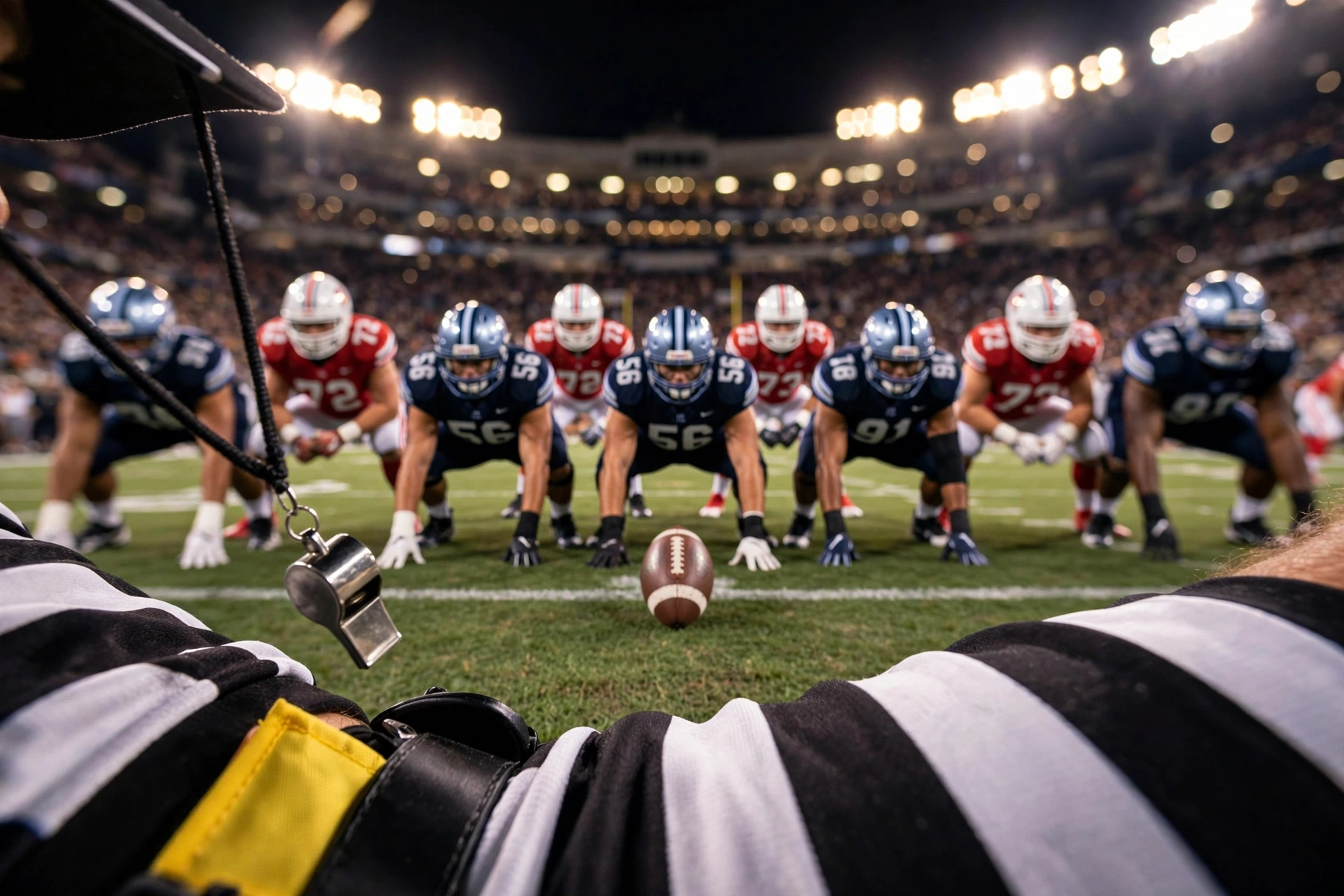
Meanwhile, some rights holders already operate alternate or specialist camera feeds that the primary broadcast uses only selectively: tactical cameras, player or referee point-of-view cameras, tunnel and warm-up cameras, bench cameras, behind-the-scenes feeds, specialist production feeds, alternate angles. Where such a feed sits unused, archived or visible only internally, it can instead become the foundation of a digital sponsorship product.
The opportunity exists where three conditions hold at once:
- The feed is technically available.
- The organisation has the right to distribute it separately.
- A sponsor sees value in funding or presenting the experience.
Miss any one of those and there is no product. Meet all three and there is repeatable commercial inventory around media the organisation may already control.
2. What We Propose to Build, With You
A browser-based sports sponsorship activation platform for interactive live streaming.
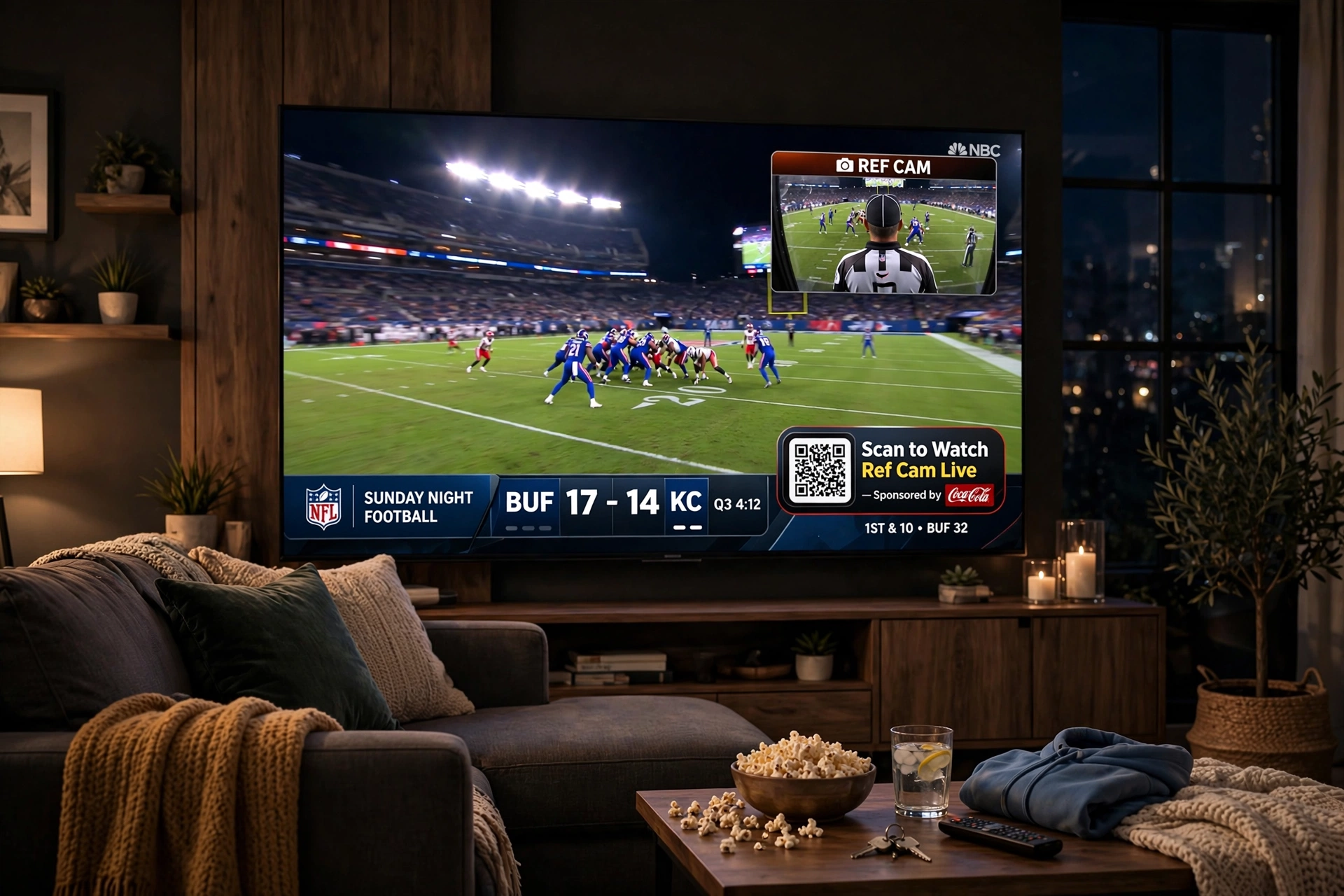
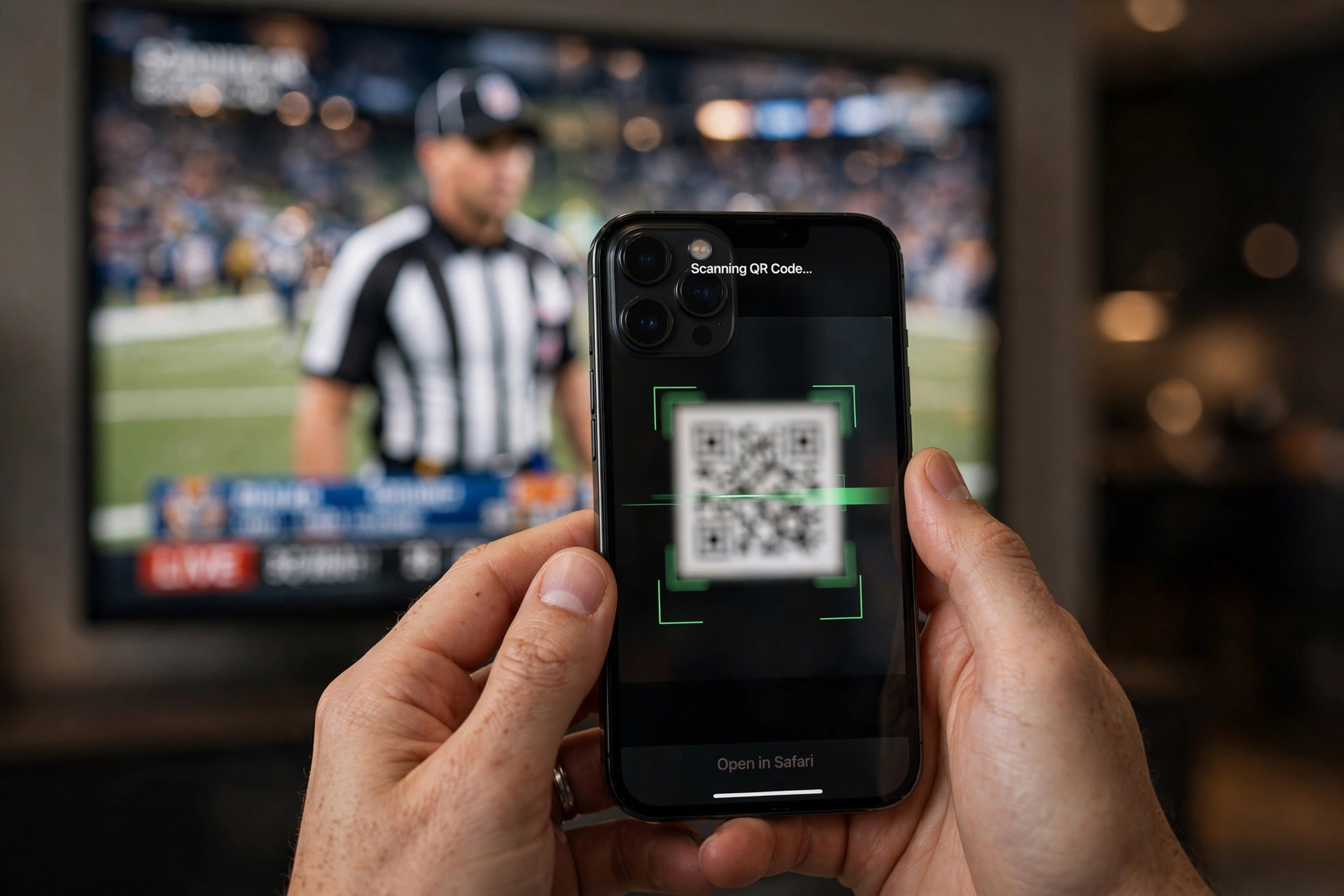
During a fixture, fans are invited into a sponsor-presented experience through a broadcast QR code, a short URL, stadium screens, LED signage, team social, a push notification, email, the team website, an existing mobile app, the venue network landing page or sponsor-owned channels. The experience opens in a browser with nothing to install.
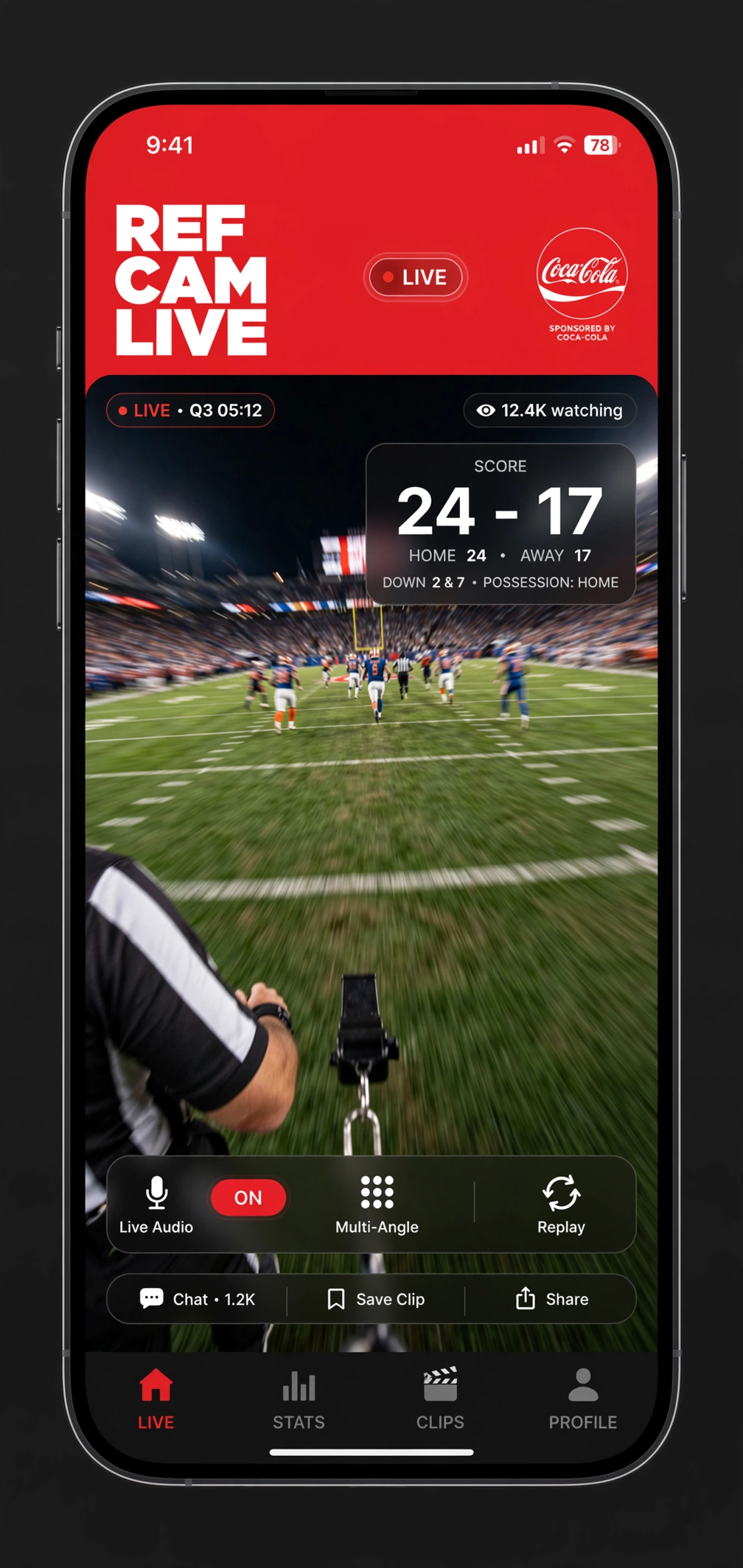
Inside it, a fan can watch an alternate live camera angle, answer a live poll, submit a prediction, complete a quiz, vote, claim a reward or follow a sponsor CTA. Where the fan chooses to opt in, contact details or declared preferences are captured with clear consent. The commercial team runs the whole thing from an activation portal, and after the fixture the rights holder and sponsor receive agreed performance reporting.
Four outcomes shape the product:
- New sponsorship inventory. A rights-cleared alternate feed becomes a repeatable, sellable package rather than a one-off branded microsite.
- Interactive sports streaming. The fan gets something meaningfully different from the main broadcast, not another static branded page.
- Measurable sponsor activation. Stream starts, viewing time, participation, reward claims and CTA activity, tracked consistently across fixtures.
- Consented fan data. Information captured only where there is a clear fan benefit and an explicit permission model.
The product principle
This should not be sold as "we have another live stream". It should be sold as "we can turn an alternate live feed into measurable sponsorship inventory".
The live video is the attention asset. The interaction layer converts attention into participation. The reward layer converts participation into action. The consent layer converts selected participation into usable audience data. The reporting layer gives the sponsor evidence of what actually happened. Each layer only matters because of the one beneath it.
3. Why This Problem, Why Now
Sports viewing is already multi-screen
Fans supplement the primary broadcast with live statistics, fantasy, social conversation, creator content and alternate angles. The main broadcast does not have to contain the whole fan experience — and increasingly it does not.
Sponsors need measurable actions
Digital activation moves the conversation past impressions toward participation, interaction, lead capture and attributable action. That is a different sales conversation, and a more defensible one at renewal.
Alternate feeds can be genuinely differentiated
Where a rights holder already has an alternate camera feed and the right to distribute it, that feed offers something the main broadcast does not. The differentiation is in the angle, not in the player.
Browser delivery removes the friction
A QR code or link into a mobile browser avoids asking a supporter to install another activation app for one fixture — historically the point at which most of the audience is lost.
4. The Foundation
This proposal starts from the operating reality rather than a built product: the platform described here has not been built. What follows is the working model a pilot would test.
How a fan gets from a QR code to a measured action
Configure the activation. The commercial or partnerships team sets up sponsor, fixture, feed, campaign name, sponsor logo, brand colours, campaign message, interaction type, reward, CTA, start and end times, consent settings and reporting requirements. Configurations are saved so the next fixture is a clone, not a rebuild.
Publish the entry point. The platform generates a QR code, a short link and a campaign URL for distribution through broadcast, venue, owned digital and sponsor channels.
Validate the live feed. Before opening, the platform confirms feed availability, ingest status, encoder status, expected bitrate, playback health, the rights window, the distribution region and activation timing.
Serve the stream. The rights-cleared feed is ingested, encoded and delivered to the supporter's browser. No account and no payment details unless the rights model specifically requires authentication.
Run the interaction. A score prediction, a player vote, a best-moment poll, trivia, a sponsor challenge or a reward unlock, tied to the live moment.
Capture identity progressively. Watch, then interact, then choose whether to claim a reward or opt in. Identity is requested at the point it becomes necessary, never on the first screen.
Deliver the reward. Eligibility, unique code, inventory, expiry, claim status, redemption status and campaign limit, all managed by the system rather than a spreadsheet.
Close the activation. Operational controls close the experience at the agreed boundary and move it to a results, replay-disabled, sponsor thank-you, CTA or archived state depending on rights and configuration.
Report. A consistent activation report for the sponsor and the rights holder, in the same shape every fixture.
The activation funnel
The commercial funnel should be explicit: broadcast or promotional exposure, QR scan or link open, stream start, meaningful viewing, interaction, reward claim, consent, sponsor CTA, redemption or conversion. Not every activation uses every step. The point is to measure movement from attention toward action rather than reporting exposure and calling it engagement.
Broadcast synchronisation
A second-screen experience has to understand its timing relative to the main broadcast. The web stream can run ahead of television or behind it, broadcast delay varies by distributor, and the consequences are concrete: a poll opening too early, a prediction closing too late, a sponsor cue landing at the wrong moment, or an alternate angle revealing a goal before the broadcast does.
A synchronisation layer tracks main broadcast delay, alternate stream delay, interaction timing, poll opening, prediction closing, stream timestamp and sponsor cue timing. The first release does not need frame-accurate synchronisation. It does need the latency difference measured, tested and operationally managed.
Feed health and failure handling
A sponsor-funded live experience cannot show a black player. The platform monitors source feed health, ingest connection, encoder status, bitrate, stream start failures, playback errors, buffering and CDN errors.
When the feed drops, the experience falls back to a clear service message, sponsor creative, a live poll, live statistics, approved alternate content or a backup feed — something like "This camera angle is temporarily unavailable. Stay here and we will restore the feed when possible." The operational team is alerted at the same moment.
Entitlement and rights controls
Distribution rights are architecture, not configuration. Controls include geographic restrictions, a fixture access window, signed playback URLs, token expiry, concurrent-session limits, domain and referrer restrictions, authentication where required, replay permissions and recording restrictions. A typical pilot configuration might be available in one territory, open for a defined activation window, replay disabled, authentication not required. Stronger rights-management controls belong in deployments that need them, not in a first pilot.
Interaction, rewards and consent
The interaction layer stays deliberately light in version one: a poll (who has been player of the match, which moment was best, which angle next), a prediction (what happens next, who scores next, final score) or a quiz (matchday trivia, a sponsor-supported challenge). A broader campaign engine can be integrated later. This product is not trying to become the organisation's whole fan engagement platform; its job is to connect interaction to alternate live media and sponsorship inventory.
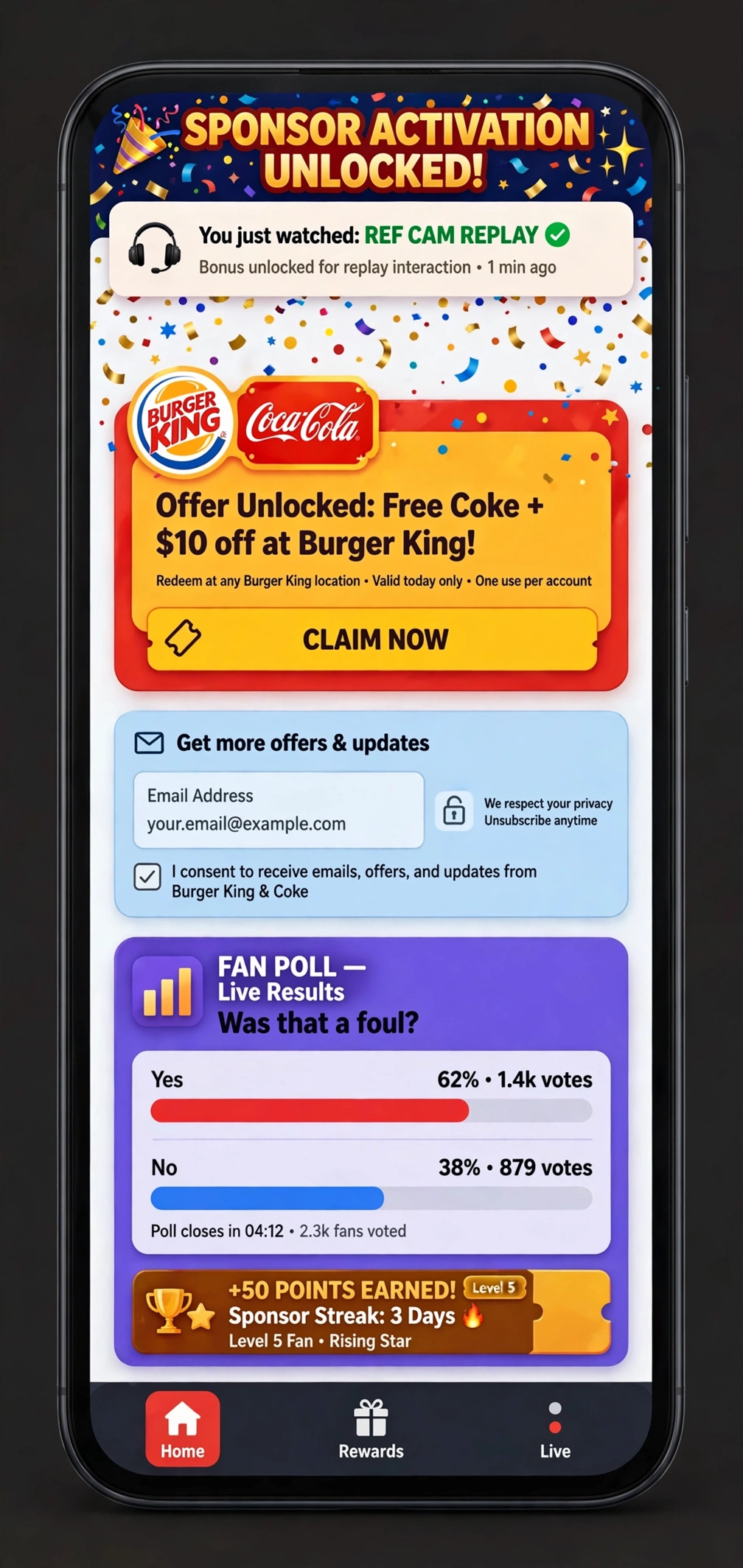
Rewards need controls to survive contact with the internet: unique codes, inventory, per-user and where appropriate per-device limits, expiry, claim and redemption status, a redemption API, a campaign budget ceiling and duplicate detection. Reporting must separate reward issued from reward redeemed — the gap between those two numbers is where the honest conversion story lives.
On consent: watching the exclusive angle should not require surrendering personal information. Before launch the rights holder and sponsor agree who controls the information, what is collected, why, who receives it, how long it is retained, how consent is withdrawn, and whether sponsor contact permission is separate. It should be.
5. Proposed Architecture
| Component | Responsibility | Main inputs | Main outputs |
|---|---|---|---|
| Activation portal | Configures sponsor, fixture, branding, interaction, reward and publishing settings | Commercial team configuration | A published, reusable activation |
| Feed ingestion | Receives the alternate live video feed | Production output, encoder | Ingested stream |
| Streaming delivery | Encodes and distributes the feed to browsers | Ingested stream, delivery configuration | Playable mobile web stream |
| Feed health monitoring | Tracks source, ingest, encoder and playback health | Stream telemetry, client errors | Alerts and fallback triggers |
| Broadcast synchronisation | Manages timing between broadcast, alternate feed and interactions | Measured delays, cue schedule | Correctly timed polls, predictions and cues |
| Entitlement layer | Applies geographic, temporal and access restrictions | Rights configuration | Signed, scoped playback access |
| Entry generation | Produces QR codes, short links and campaign URLs | Activation configuration | Distributable entry points |
| Interaction engine | Runs polls, predictions and quizzes against the live moment | Fan responses, timing rules | Participation events and results |
| Consent and data capture | Records opt-ins, contact details and declared preferences | Fan choices, consent wording | Permissioned audience records |
| Reward engine | Issuance, inventory, limits, expiry and redemption | Eligibility rules, claims | Issued and redeemed rewards |
| Sponsor package layer | Groups repeatable activations into commercial products | Fixture list, inventory definition | A sellable season package |
| Analytics pipeline | Records viewing, interaction and conversion events | Client and server events | Funnel data |
| Sponsor reporting layer | Produces rights-holder and sponsor-facing reports | Funnel data, permission scope | Consistent per-fixture report |
| Operational controls | Opens, pauses and closes activations | Operator actions, schedule | Live state changes with an audit record |
| Integration layer | Connects broadcast, CRM, rewards and analytics systems | APIs, webhooks, exports | Data in the systems the teams already use |
Final boundaries would be defined during discovery with the broadcast, digital and commercial teams.
Roles and governance
The commercial director owns the inventory, proposition and pricing. The head of partnerships owns activation requirements and sponsor reporting. The activation manager configures branding, rewards, mechanics and schedule. The digital product manager owns the fan experience and its operation. The broadcast producer owns feed availability, ingest, cues and technical rehearsal. The CRM or marketing manager owns consented data and follow-up. The data protection or legal lead approves data capture, sponsor data sharing, consent, retention, competition terms and the rights position. Material changes to consent wording, reward rules, distribution rights or activation configuration are auditable.
Sponsor package builder
If this is to become recurring inventory rather than a one-off, the platform eventually needs commercial packaging — an exclusive camera partner season package covering a set number of fixtures, sponsor-presented feed, branding, agreed promotional entry points per fixture, one interactive mechanic, reward integration, sponsor CTA, per-fixture reporting, a season summary and a consent option where agreed. That lets a commercial team sell a product rather than design a new activation every time.
6. Scenarios We'd Target Together
The tactical camera as a season package
A club sells an exclusive camera partner package across a run of home fixtures. Each matchday the activation is cloned from the last, the sponsor's branding and reward change, and the report arrives in the same shape every time. The commercial value is in the repeatability, not in any single fixture.
The QR prompt at halftime
The broadcast displays a QR code during the halftime break. Fans scan into the warm-up camera feed, answer a sponsor-presented poll on the second-half lineup and see the result before play resumes. The funnel from scan to interaction is attributable to that specific broadcast moment.
The feed that drops at kickoff
The encoder fails ninety seconds into the activation. Health monitoring catches it, the experience switches to sponsor creative and a live poll with a clear service message, and the operations channel is alerted. The sponsor's activation continues in a degraded but presentable form rather than becoming a black rectangle with their logo above it.
The prediction that would have spoiled the goal
Rehearsal shows the alternate feed running several seconds ahead of the television broadcast. Interaction timing is configured around the measured delay and the feed is deliberately delayed, so a supporter watching both does not learn the outcome from the second screen first.
The reward nobody redeems
Claims are strong and redemptions are weak. The reporting separates the two, so the conversation with the sponsor is about the offer rather than about the platform — and the next activation tests a different reward instead of a larger audience.
The fan who never identifies themselves
A supporter watches for eleven minutes, votes twice and leaves without opting in. That is a successful activation: attention and participation were measured, no data was collected without a reason, and the sponsor's report reflects real engagement rather than a form submission.
7. Standards, Regulations & Governing Rules
| Area | Why it matters | Proposed platform response |
|---|---|---|
| Broadcast and media rights | A camera feed existing does not mean it can be distributed separately | Confirm feed ownership, digital distribution rights, territory, activation window, sponsor rights, replay and clip rights, and existing broadcaster restrictions before any build |
| Entitlement enforcement | Rights positions have to hold at delivery, not only on paper | Geographic and temporal restrictions, signed playback URLs, token expiry, concurrency, domain and referrer controls |
| Data protection | Activation data is personal data as soon as a fan identifies themselves | Data minimisation, documented purpose, configurable retention, export, deletion, access controls |
| Marketing consent | Entering an activation and agreeing to sponsor contact are different acts | Separate, explicit permission with wording, timestamp and source recorded |
| Children and younger supporters | Sports audiences include minors, and rewards attract them | Age-aware flows, reduced collection, guardian requirements where applicable, restricted profiling |
| Competition and reward rules | Prize mechanics carry their own obligations | Configurable eligibility, campaign window, reward terms, winner process, inventory and audit history |
| Accessibility | A second-screen experience must work for supporters with access needs | Keyboard navigation, readable contrast, semantic controls, text alternatives, accessible validation |
| Security | Streams and audience data both need protecting | Encryption, signed streaming access, role-based access, audit logs, restricted administrative access |
The platform supports these controls. The rights holder remains responsible for its rights position, its consent wording and its legal obligations.
8. How the System Would Integrate
- Cameras and venue encoders. The alternate feed comes from the organisation's production environment. The pilot validates feed protocol, resolution, bitrate, audio, stability and latency before anything else is scheduled.
- Streaming infrastructure. Encoding and delivery through appropriate content-delivery infrastructure, sized against expected concurrency rather than hoped-for audience.
- Broadcast graphics. Where permitted, QR codes or prompts appear in the primary broadcast — one entry channel among several, never the only one.
- CRM. Consented supporter information transfers into the rights holder's existing CRM, with permission status intact.
- Consent management. Consent records and withdrawal handling align with the tools the organisation already uses.
- Reward platforms. Coupons or offers issued through an existing provider, with redemption status returned so the issued-versus-redeemed gap stays visible.
- Analytics. Activation events flow into the organisation's reporting environment rather than living only in the platform.
- Sports data. Where useful, live match data drives predictions, poll timing, game state, player lists and results.
9. Proposed Delivery Plan
The first pilot should be deliberately narrow: one fixture, one alternate live feed, one sponsor, one interaction format, one reward workflow, one fan journey, one sponsor report.
Phase 1 — Scope, rights and feed validation (Weeks 1-2)
Work with broadcast, commercial, partnerships, digital and legal to confirm the feed, the rights, the territory, the stream format, expected concurrency, broadcast delay, the interaction, the reward, the consent model, sponsor reporting and the success measures. If the rights position is not clear here, nothing later in the plan is safe.
Phase 2 — Activation build (Weeks 3-7)
Build the activation portal, feed ingestion, streaming delivery, mobile web player, feed health monitoring, QR and short-link generation, one interaction engine, consent capture, one reward workflow, basic analytics and the sponsor report.
Phase 3 — Production rehearsal (Weeks 8-9)
Test feed ingest, latency, browser playback, expected concurrency, the broadcast prompt, the QR journey, stream failure and fan fallback, interaction timing, reward issuance, reporting and data export. Rehearse the failure path as seriously as the happy path — it is the one the sponsor will remember.
Phase 4 — Live pilot (Week 10 onward)
Run the activation on one real fixture. Measure the agreed funnel and the actual delivery cost.
Deliberately out of scope for the first pilot
A native mobile app, multiple simultaneous camera angles, advanced replay, a large campaign-template library, a full loyalty programme, automated CRM journeys, complex gamification and a full sponsorship management suite. Each of those adds production complexity before the basic question — will fans watch, and will a sponsor pay again — has an answer.
The questions the pilot exists to answer
Will fans scan? Will they successfully start the stream? How long do they watch? Do they interact? Does the interaction improve sponsor value? Do they claim the reward, and do they redeem it? What share choose to opt in? What does streaming actually cost? How stable is the feed? How much production support does it need? And the one that decides everything: does the sponsor want to do it again?
10. Expected Impact
These are pilot outcomes to validate, not existing results.
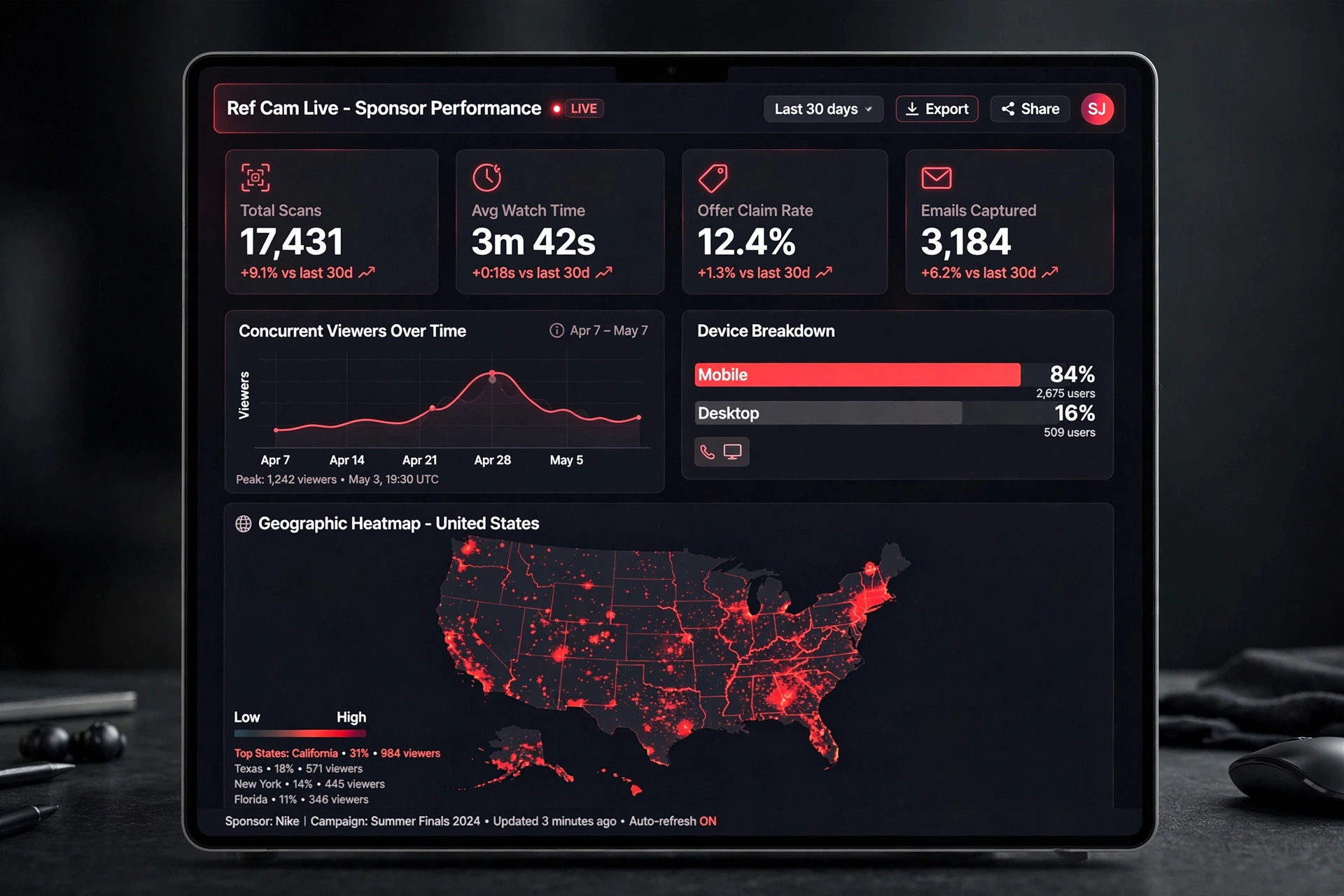
| Outcome | Intended effect | Measurement |
|---|---|---|
| New sponsorship inventory | An alternate feed becomes a sellable package | Activation or package sold |
| Fan adoption | Fans actually enter the experience | QR scans and link opens |
| Stream adoption | Fans get to playing video | Successful stream starts |
| Attention | The feed holds interest | Average viewing time against a meaningful-viewing threshold |
| Participation | Viewers become active participants | Poll, prediction or quiz completion |
| Reward conversion | Engagement connects to action | Claims and redemptions, reported separately |
| Consented fan data | Permissioned audience data captured with a reason | Valid opt-ins |
| Sponsor engagement | Evidence beyond impressions | CTA activity across the funnel |
| Delivery economics | The real cost is known before scaling | Cost per fixture, per viewer, per activation |
| Operational reliability | Production complexity understood | Incidents, buffering, feed downtime |
| Repeatability | Commercial viability established | Sponsor and rights-holder willingness to repeat |
The pilot succeeds only if the activation creates enough fan and sponsor value to justify running it again. Proving a video player works is not the test.
11. Who We're Looking For
The organisation this should be built with
A professional club, league, federation, broadcaster, rights holder, collegiate programme, venue operator, combat sports promoter or live event operator that already has access to an alternate live camera feed, or will provide one for a controlled pilot.
The ideal partner has a technically available feed, clear rights ownership, a commercial team, a sponsor interested in digital activation, a broadcast or production owner, a digital product owner and a settled consent and data-sharing model.
The person this should be built with
Usually the commercial or partnerships lead who owns the gap between broadcast inventory and sponsorship value, working directly with the broadcast producer. Both are needed: one knows what can be sold, the other knows what can actually leave the truck.
How this relates to a fan engagement platform
These stay separate products. A fan engagement platform exists because marketing teams repeatedly need to launch polls, quizzes, predictions and competitions; its owners are fan engagement, marketing and CRM. This platform exists because a rights holder has an alternate live media asset and wants measurable sponsor inventory; its owners are commercial, partnerships, broadcast and digital. They can share polls, predictions, rewards, consent and analytics, and in a broader ecosystem the fan engagement platform could eventually supply the interaction engine inside this one — but the buyer, the infrastructure and the commercial objective are different, and merging them produces a product that serves neither.
Adjacent products we could co-build next
- Sponsorship inventory management
- Sponsor activation evidence platform
- Sponsor proposal builder
- Sponsor obligation tracker
- Automated sponsorship reporting
- Sponsorship renewal intelligence
- Multi-angle streaming experience
- Fan reward wallet
- Live sports gamification
- Matchday digital concierge
Built on SportsFirst's experience designing and developing sports platforms, live experiences, sponsorship workflows and fan engagement products.
This is a proposal, not a finished product. If the organisation already controls a suitable alternate feed and has a commercial partner interested in measurable digital activation, the next step is mapping one fixture, one feed, one sponsor and one interaction into a controlled pilot.
Live demo: Povora Sports Sponsorship Activation Platform — Interactive prototype showing the fan experience, QR entry, live streaming, polls, rewards and sponsor reporting dashboard.
Questions we get asked
Does the alternate camera feed need to already exist?
The strongest pilot starts from a feed that is already technically available and separately distributable. Where no suitable feed exists, camera, production and encoding become a separate part of the project with their own cost and lead time — and the commercial case has to carry that too, rather than assuming the feed is free because the cameras are already in the ground.
Does this change the main broadcast?
Not necessarily. A QR prompt in the broadcast is one useful entry point, but fans can also arrive from social media, the team website, a push notification, email, stadium screens, the venue network landing page or sponsor-owned channels. Broadcast placement should be an option, never a dependency the whole activation rests on.
What happens if the stream runs ahead of the television broadcast?
The latency relationship gets measured before launch, and interaction timing is configured around the actual delay rather than an assumed one. A second-screen feed that reveals action before the primary broadcast may need deliberate added delay. The first release does not need frame-accurate synchronisation; it does need the difference understood, tested and operationally managed.
What happens if the feed fails mid-fixture?
The player must not simply go black on a sponsor-funded experience. Feed health is monitored across source, ingest, encoder, bitrate and playback, and a failure moves the experience to a controlled fallback — a clear service message, sponsor creative, a live poll, approved alternate content or a backup feed. The operational team is alerted at the same moment the fan sees the message.
Does a fan have to give an email address to watch?
Not by default. The preferred journey is watch, then interact, then choose whether to claim a reward or opt in. Identity is requested only where there is a clear reason for it. Anonymous viewing and interaction can still be measured where that is technically and legally appropriate.
Can sponsors receive supporter contact information?
Only where the supporter has been clearly informed and has given the required permission, presented separately from participation. Sponsor reporting can be complete and useful in aggregate without transferring personally identifiable fan data, and the rights holder should not pass identifiable data across simply because a sponsor funded the activation.
How is this different from a general fan engagement platform?
A fan engagement platform exists so marketing teams can launch polls, quizzes, predictions and competitions repeatedly across many channels. This product wraps interactive engagement around alternate live media and turns that experience into sponsorship inventory. Different buyer, different infrastructure, different commercial objective — though the two can eventually share the interaction, reward, consent and analytics layers.
Does the platform manage sponsorship contracts?
Not in the first release. It manages the digital activation and its reporting. Contract management, inventory sales and sponsorship CRM functionality could follow later, once the activation itself is proven repeatable enough to be worth selling as recurring inventory.
Recognise this problem?
Tell us one sports workflow that still runs on paper, spreadsheets, WhatsApp or an outdated system. We will map it and show you what a simpler product looks like.
Start the conversation