Sports Recruitment Platform for Sports Organisations
By Arpan Desai, Founder, SportsFirst
A sports-native hiring platform covering permanent, contract, freelance and casual matchday roles in one place, with a returning-worker register and an assistant layer that explains its matches rather than scoring candidates.
Problem
A federation might need a permanent head of performance, forty accreditation staff for one tournament, freelance content producers for a weekend and casual stewards every fortnight, and almost none of that runs through the same process. The permanent role goes through an applicant tracking system if one exists. Everything else runs on a spreadsheet of people who worked last season, a group chat, and whoever the operations manager can reach on a Thursday. The same steward is re-onboarded every year because nobody kept the record of the last time. Shifts are offered by message and confirmed by nobody, so a role ends up double-covered or uncovered and both are discovered on the day. Meanwhile people who want to work in sport search across generic job boards, individual club career pages and word of mouth, because no single place lists the work.
Product idea
One sports-native hiring platform covering the full range of how the industry actually staffs: permanent roles, fixed-term contracts, freelance engagements and casual matchday shifts, in one place rather than four. Employers create a role once and it carries the things sport needs and generic boards do not model - a fixture or tournament it belongs to, whether accreditation and background checks are required, whether the work recurs each home fixture. Candidates hold one profile with availability, credentials, prior engagements and the roles they will travel for. Between the two sits an assistant layer that drafts a role description from a brief, proposes matches with the reasons visible, surfaces relevant opportunities to candidates, and chases the confirmations that otherwise go unanswered. Returning workers are the point that generic platforms miss entirely: someone who stewarded all last season should be re-engaged from a record, not re-recruited from scratch.
Where the AI agent does the work
The assistant layer is the agent part of this product, and the FAQ already draws its boundary: it drafts a role description from a brief, proposes matches with the reasons visible, surfaces opportunities to candidates, and chases confirmations that have gone quiet. What that removes is the specific cost in the problem — an operations manager working a Thursday phone list and a shift confirmed by nobody until the gap shows up on the day. Chasing a non-reply is a small, repetitive, unrewarding task and exactly the kind an agent should carry, provided the match it proposes stays inspectable rather than a bare score. Nothing about who gets hired moves without a person deciding.
- Roles involved
- Head of HR, Operations manager, Recruitment lead, Event staffing manager
- Relevant to
- Professional club, League office, Federation / governing body, Venue & stadium operator, Collegiate athletics
- Systems in play
- Applicant tracking systems, HR and payroll systems, Workforce scheduling tools, Spreadsheets and messaging groups, Background check providers
A proposal worked through in full
A different problem, taken all the way to architecture, standards and a phased delivery plan — the level of detail any idea here can be developed to.
Sports Fan Engagement Platform for Interactive CampaignsSport hires in a pattern most employers never encounter. A federation can be recruiting a permanent head of performance, forty accreditation staff for one tournament, freelance producers for a weekend and casual stewards every fortnight — all at once, and almost none of it through the same process.
This proposed sports recruitment platform puts permanent, contract, freelance and casual hiring in one place, with an assistant layer between employers and candidates.
There is a clickable prototype at sports-jobs-agent.vercel.app.
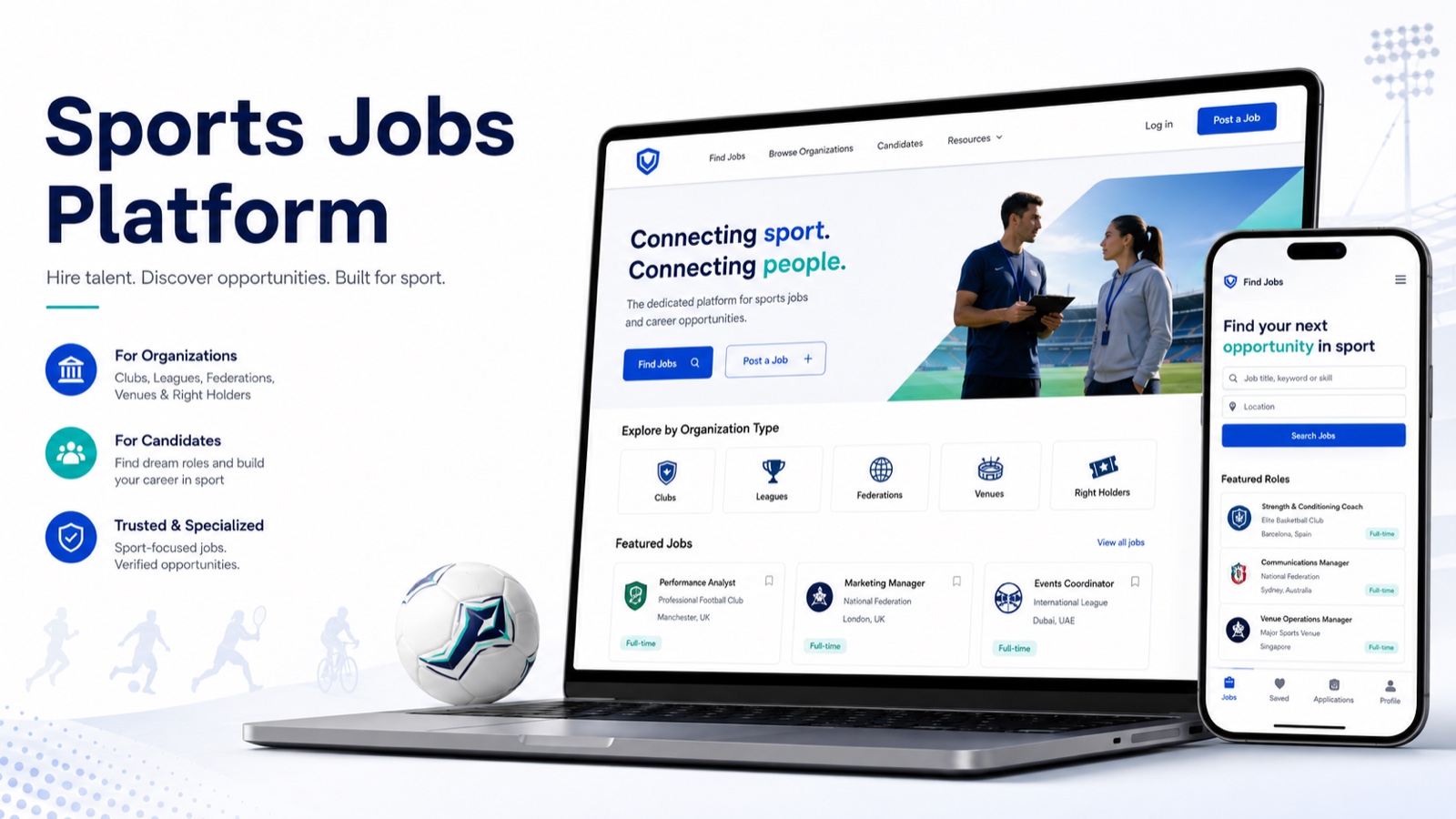
Concept design. One sports-specific destination across permanent, temporary and contract hiring. Roles, organisations and figures shown are illustrative.
A role in sport carries things a generic board cannot model
A vacancy on a general platform is a title, a location and a salary. A sports role frequently needs more: the fixture or tournament it belongs to, whether it recurs every home game, whether accreditation is required, whether a background check is a condition of the role, and how many people are needed rather than one.
Modelling that properly is what separates this from posting matchday stewarding on a generic job board, which nobody does because it does not fit.
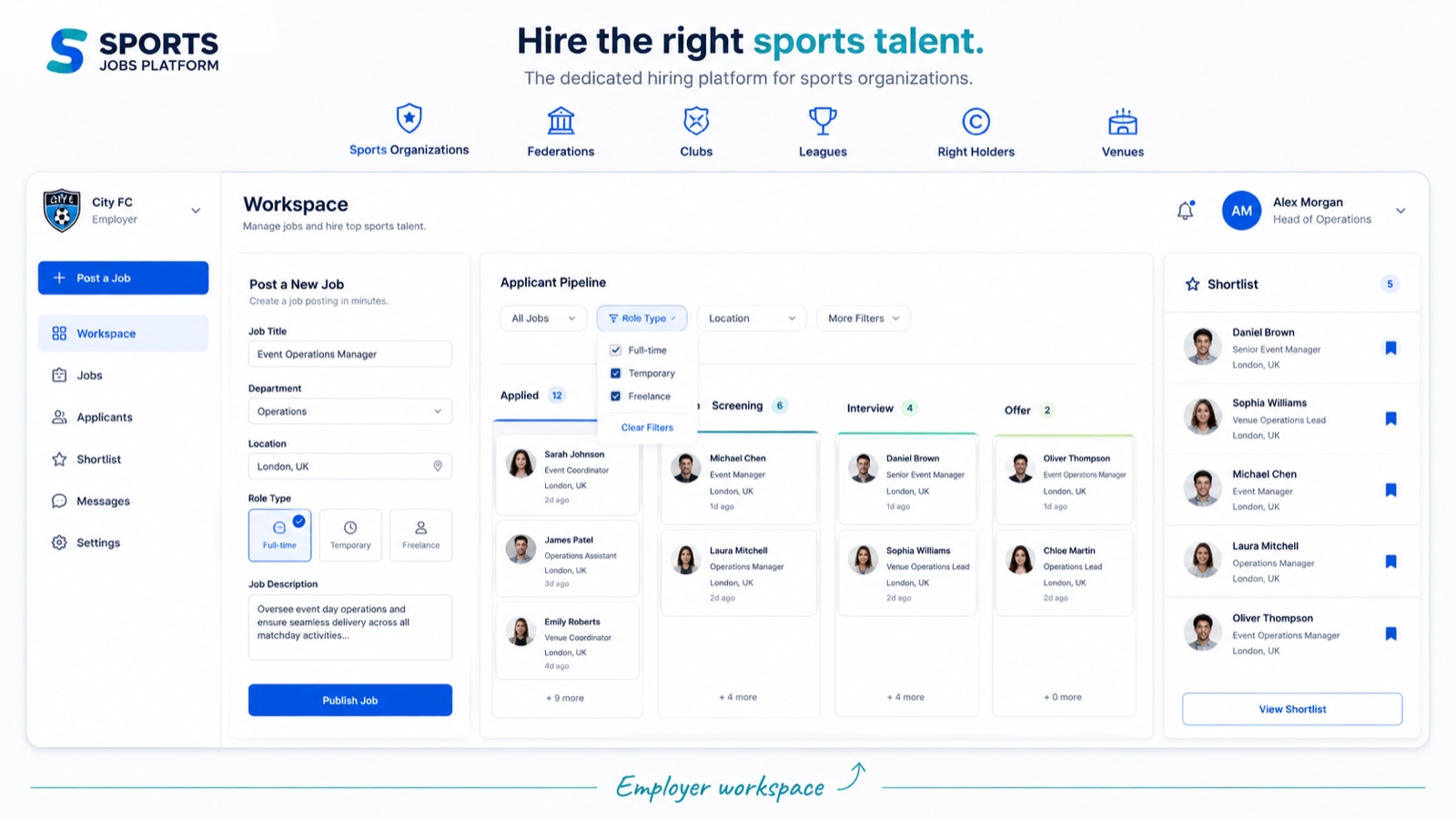
Concept design. The employer side: create a role, review candidates, move them through to hire. Organisations and candidates shown are illustrative.
The candidate side is a profile, not a CV upload
People who work in sport accumulate a particular kind of history — which venues, which tournaments, which roles, which credentials, and when each expires.
Holding that as a profile rather than a document means availability and credential status are current at the moment someone is considered, instead of being asserted in a file written eight months ago.
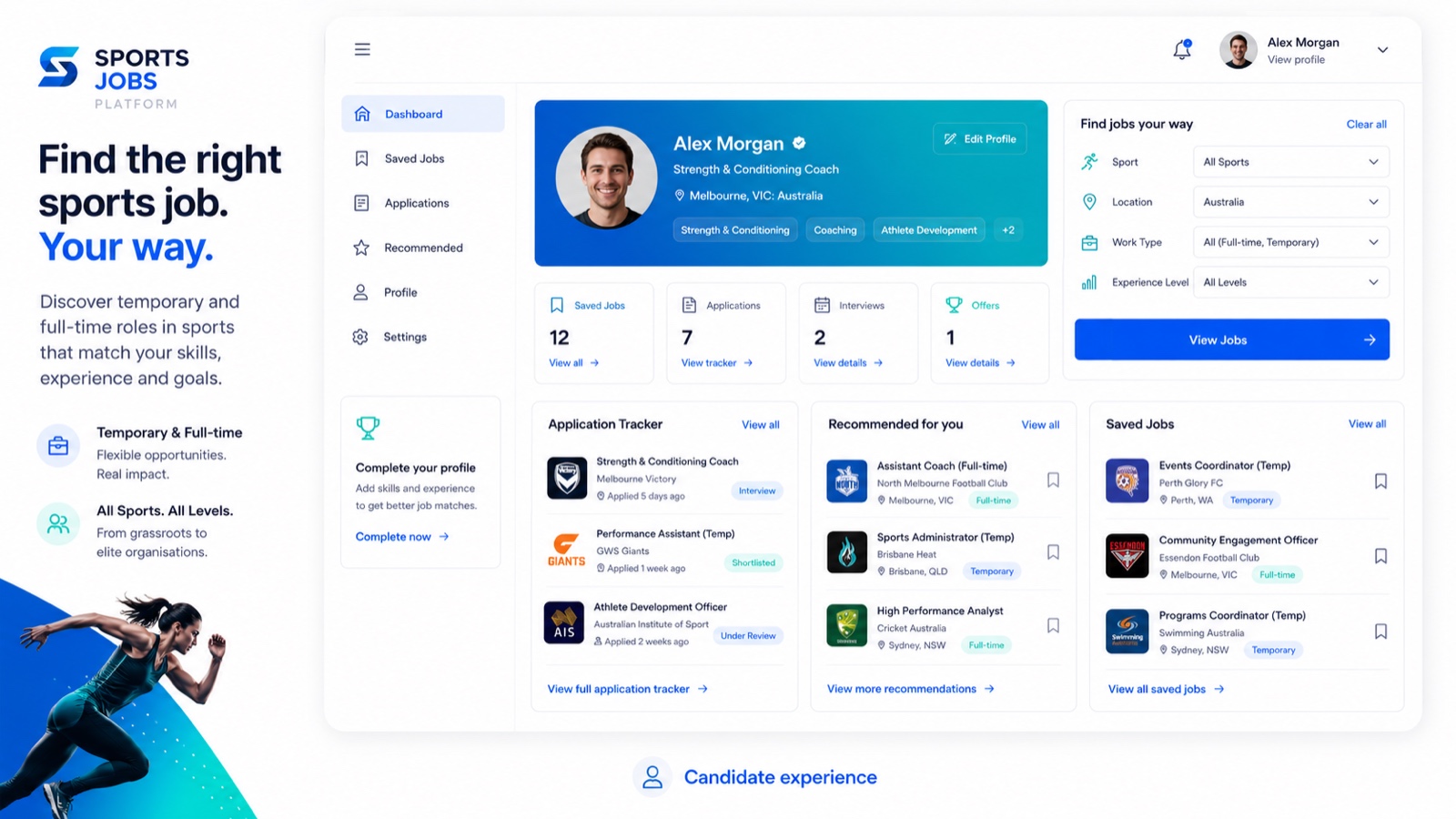
Concept design. The candidate side: find relevant work, apply, and keep one profile current. Roles and figures shown are illustrative.
Returning workers, which is where the volume actually is
The most valuable record in sports staffing is who worked last season and would come back.
Most organisations lose it. The steward who covered every home fixture is re-recruited the following August, from scratch, by someone who does not know they were reliable. Holding prior engagements against a profile turns next season's staffing problem from recruitment into re-engagement, which is faster for the organisation and considerably less insulting to the person.
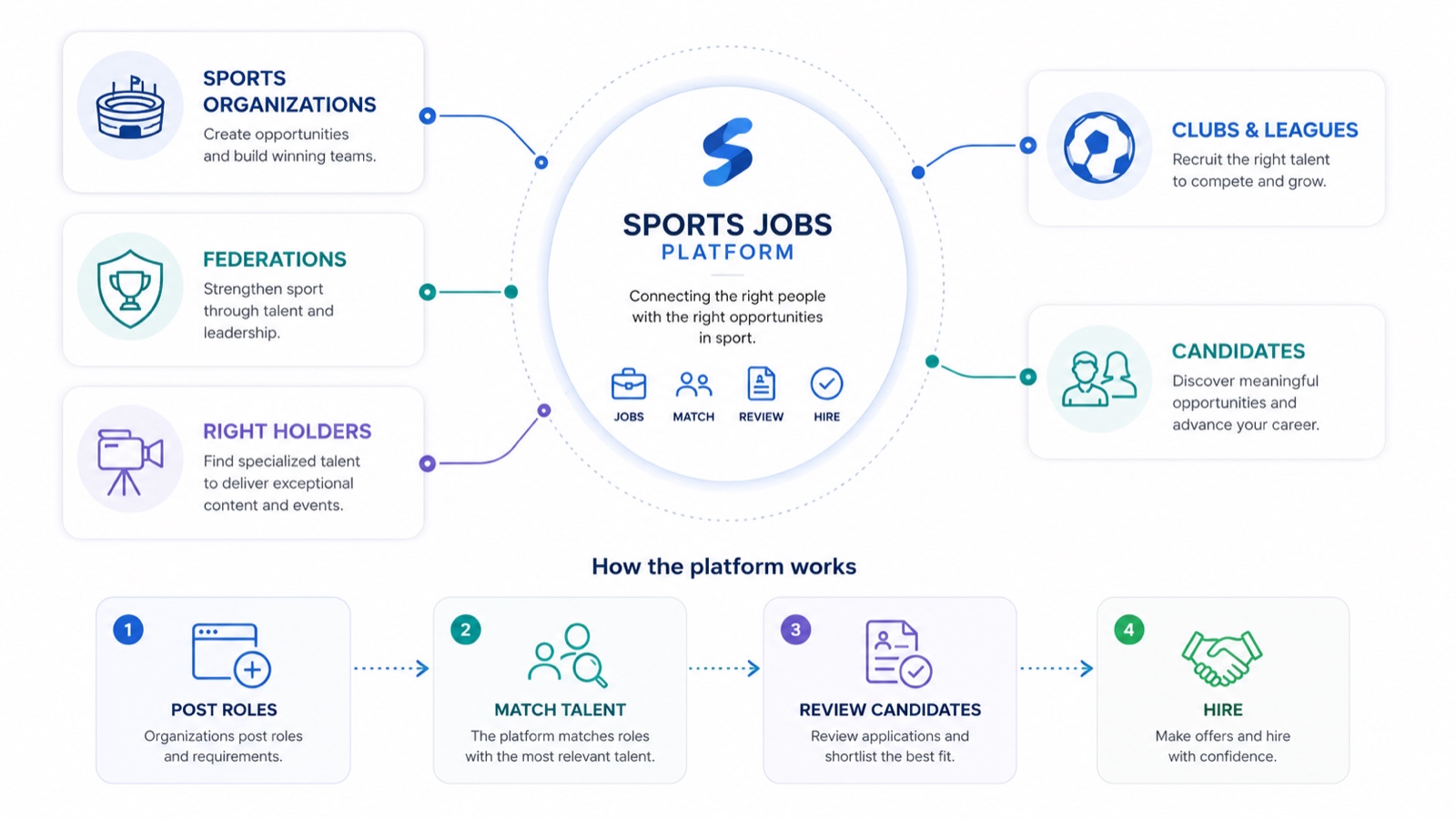
Concept design. The ecosystem this sits in, across organisations, venues, suppliers and candidates. Entities shown are illustrative.
Shifts need confirmation, not just an offer
Casual roles fail differently from permanent ones. Nobody withdraws — they simply do not reply, and the gap is discovered at the venue.
So a shift-type role carries an explicit confirmation state and a chase, and the board shows what is covered, what is offered but unconfirmed, and what is genuinely unfilled. Treating offered and confirmed as the same state is how a role ends up double-covered or empty.
What the assistant does, and what it must not
It drafts a role description from a brief, proposes candidates with the reasons visible, surfaces relevant opportunities to candidates, and chases confirmations that have gone quiet.
What it must not do is score a person without showing why. Automated screening in recruitment carries genuine discrimination risk, and an unexplained ranking is precisely the form in which that risk becomes invisible to the people relying on it. Every proposed match should be inspectable, and a hiring decision stays with a person.
Where the boundaries sit
It does not run payroll, issue contracts of employment, perform background checks or verify right to work. It records that the organisation's own checks were completed, by whom and when.
Candidate data is personal data belonging to people who may never be hired, so retention is a design question for the first release rather than a later one: how long an unsuccessful application is kept, what a returning worker's profile holds between seasons, and what is removed on request.
Questions we get asked
Is this just a sports job board?
A board lists permanent vacancies and stops there, which covers a small fraction of how sport actually staffs. Most of the hiring is casual, seasonal or freelance and never reaches a board at all, because posting a matchday steward shift as a job advert makes no sense. Handling both in one place is the point, and the casual half is the harder and more neglected one.
What does an AI agent decide here?
Nothing about a person. It drafts a role description from a brief, proposes candidates with the reasons visible, surfaces opportunities to candidates and chases unanswered confirmations. Hiring decisions stay with people, and the platform should not produce a ranking score without the reasoning behind it. Automated screening in recruitment carries real discrimination risk, and a number with no explanation is exactly the form in which that risk becomes invisible.
Does it run background checks or right-to-work verification?
No. It records that the organisation's own checks were completed, by whom and when, and can hold the review date. Performing the check, judging its adequacy and meeting employment eligibility duties stay with the employer and the providers they already use. Those obligations vary by jurisdiction and role and are not something a platform should imply it discharges.
Why is a returning-worker register the important part?
Because the same people come back. A steward who worked every home fixture last season is re-onboarded from scratch the following August in most organisations, which wastes their time and the operations manager's, and loses the knowledge of who was reliable. Holding prior engagements, credentials and availability against a profile turns next season's staffing from recruitment into re-engagement.
Does it replace our applicant tracking or HR system?
For permanent hiring, probably not, and it should integrate rather than compete. Its distinctive value is the work those systems handle worst: high-volume casual and seasonal engagement, where the unit is a shift rather than a vacancy and the same person is hired thirty times a season.
What happens to candidate data?
It is personal data belonging to people who may never be hired, which makes retention a first-order design question rather than a later one. How long an unsuccessful application is kept, what a returning worker's profile holds between seasons, who can see credential status and what is deleted on request all need answering before build, not after.
Build this with SportsFirst
We work with teams, leagues, federations and venues to build custom sports software. Learn about our custom development services or read our sports app cost guide.
Is this your workflow?
Tell us one sports workflow that still runs on paper, spreadsheets, WhatsApp or an outdated system. We will map it and show you what a simpler product looks like.
Tell us about itMore in Workforce, recruitment & people ops
- Sports Volunteer Management SoftwareOne place for volunteer interest, roles, availability, shift claims and coverage, with claiming and confirming kept separate and a record of who helped that survives a change of coordinator.
- Sports Team Travel Management Software for Clubs and LeaguesSports team travel management software that gives team managers a shared itinerary, RSVP and availability tracking, travel consent collection, payment management and parent notifications for away fixtures and tournaments — replacing group chats and spreadsheets.
- AI Grant Finder Software for US Sports OrganisationsAn AI agent that ranks sports grants by estimated funding likelihood for a specific organisation, drawn from over $450M in tracked US awards and program frequency, with a drafted first-pass application per match.
- Sports Safeguarding Case Management SoftwareA secure safeguarding case management platform for sports organisations that connects concern reporting, triage, investigation workflows, actions and auditable case closure.
- Sports Sponsorship Management SoftwareOne record of what each partner was promised and what has actually been delivered, with evidence attached to the obligation and pace measured against the fixtures left to fix it.
- Sports Team Management Software for Rosters and AvailabilityOne operating layer over the squad covering roster status, availability collection, position coverage, the task cascade a late change sets off, travel readiness and the analytics over all of it.
- Sports Ticketing Software for Clubs, Leagues and VenuesSports ticketing software that sells single-match and season tickets from one seat model, with pricing tiers, mobile entry, in-platform transfer and a fan profile the club owns.
- Sports Venue Incident Management Software for Stadiums and ArenasA control-room incident record with fast intake, explicit acknowledgement, named ownership, timestamped chronology, evidence and closeout, plus the season-level pattern analysis a single event can never show.