Sports Digital Asset Management Software for Clubs and Leagues
A sports digital asset management platform that gives clubs and leagues one searchable, rights-aware home for match footage, photography, sponsor assets and social content, with AI tagging replacing folder-and-filename search.
Problem
A club's media library usually lives across a shared drive, a photographer's personal storage, a video editor's local disk and whatever the last person uploaded to the website. Finding one clean asset, last season's kit launch photo, a specific goal, a sponsor's approved logo file, means messaging whoever touched it last and waiting. Naming conventions drift within a season. Nobody can say with confidence which files carry which usage rights, so a marketer either reuses an asset that should have expired or avoids one that was actually cleared, and both cost time. The volume only grows: every matchday adds hundreds of photos and hours of footage, and a shared drive has no concept of search, tagging or expiry.
Product idea
Sports digital asset management software that gives a club, league or federation one searchable home for match footage, photography, headshots, sponsor and brand assets, broadcast clips and social cuts. Uploads are auto-tagged by player, team, matchday, competition and asset type, so search works on what something is rather than what it was named. Every asset carries a rights status, cleared, embargoed, territory restricted or expired, driven by the same licence data a rights register holds, so a media team never has to guess whether a clip is safe to publish. Structured collections group assets by fixture, campaign or sponsor for handoff to an editor or partner without a zipped folder and an email. The system indexes and organises what the organisation already owns; it does not create rights it was not granted, and it does not replace a video editor or a MAM platform built for post-production.
Where the AI agent does the work
The moment this matters is someone searching for "the free kick from the derby" or "an approved headshot of the new signing" with no idea what the file is called or where it sits. Automatic tagging by player, moment and asset type turns that into a normal search instead of a message to whoever uploaded it. The same layer flags rights status at the point someone tries to reuse an asset, catching an expired or restricted file before it goes out rather than after, which is the expensive direction for this kind of mistake. None of this replaces editorial judgement about what to publish; it removes the time spent finding and checking the file before that judgement can even happen.
- Roles involved
- Media operations coordinator, Head of content, Social media manager, Brand and marketing manager, Rights manager
- Relevant to
- Professional club, League office, Federation / governing body, Collegiate athletics, Women's league
- Systems in play
- Cloud storage and shared drives, Video editing and MAM platforms, Social publishing tools, Contract and rights repositories, Website and CMS platforms
A proposal worked through in full
A different problem, taken all the way to architecture, standards and a phased delivery plan — the level of detail any idea here can be developed to.
Sports Coaching & Player Development Platform for FederationsA photographer uploads four hundred matchday images to a shared drive. By Monday, nobody remembers which folder they landed in, whether the sponsor board is visible in enough of them, or whether last season's naming convention still applies. The asset exists. Finding it does not.
This proposed sports digital asset management (DAM) software gives a club, league or federation one searchable home for everything visual it produces or is sent: match footage, photography, headshots, sponsor and brand assets, broadcast clips and social cuts, indexed by what each file actually is rather than what it was called.
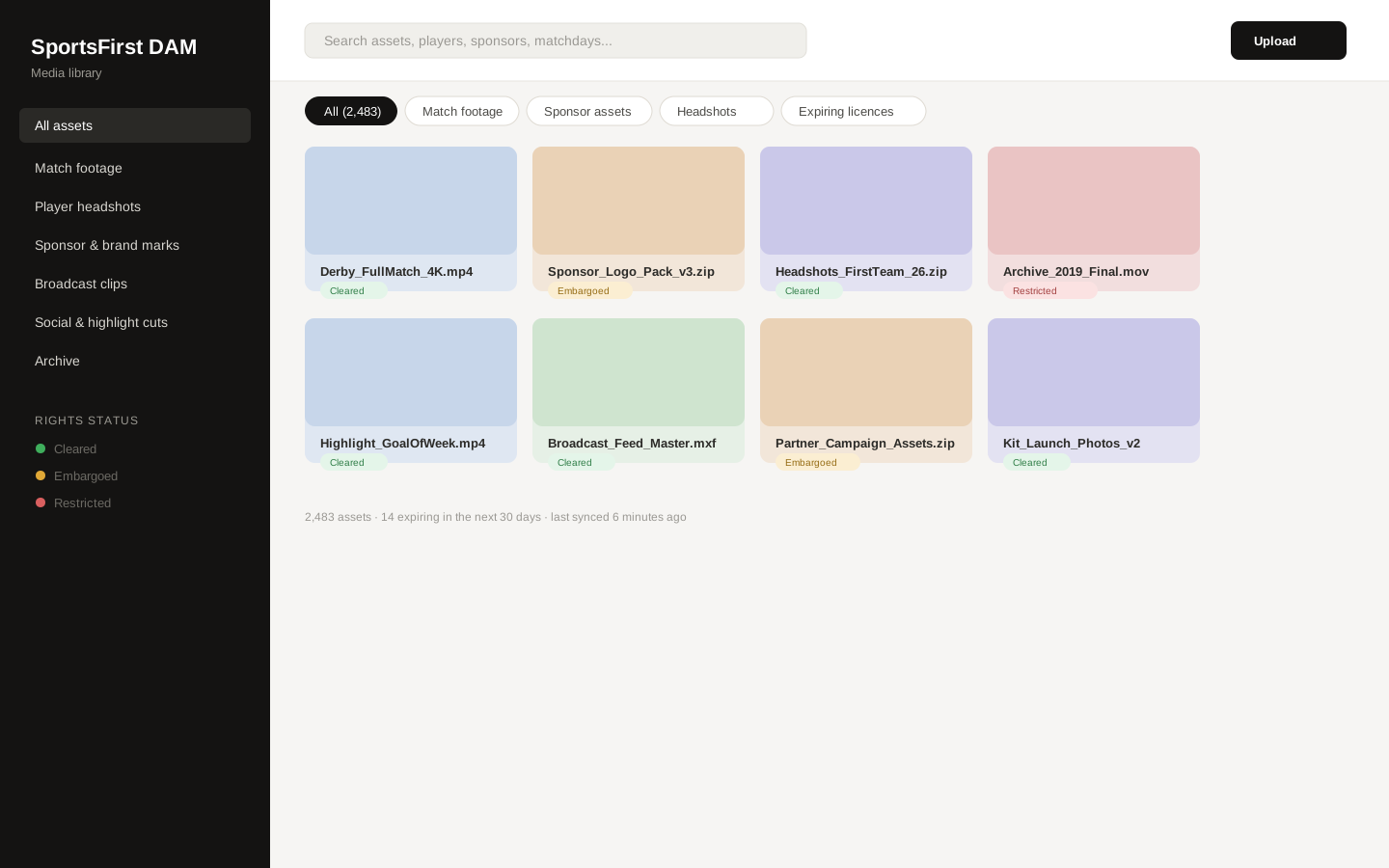
Search by what it is, not what it was named
A folder structure only works if everyone follows it, and nobody does for very long. The alternative is tagging that happens automatically at upload: player, team, matchday, competition, and a general asset type such as headshot, action shot or graphic.
That turns "the free kick from the derby" from a message to whoever edited that game into a search a marketer runs themselves, the same afternoon, without waiting on a reply.
Rights status is a property of the file
The single most expensive DAM mistake in sports is reusing an asset whose licence has lapsed, or sitting on one that was actually cleared weeks ago because nobody could confirm it. Attaching rights status, cleared, embargoed, territory restricted or expired, directly to the asset removes the guess.
The DAM does not decide what is legally permitted. It surfaces the position already recorded in the organisation's licence data at the exact moment someone is about to use the file, which is the only moment that status is actually useful.
Collections replace the zipped folder and the email
Handing a set of assets to a freelance editor, a sponsor's agency or a broadcast partner usually means a zipped folder, an email, and a second email a week later asking for the three files that were missing.
A shareable collection, scoped to exactly the assets relevant to one fixture, campaign or partner, with the access and expiry the organisation sets, replaces that thread entirely. The partner sees what they are meant to see and nothing else, and the organisation is not maintaining an ad hoc list of who has what.
What it does not do
It does not edit video, replace a MAM platform built for broadcast post-production, or make a legal judgement about whether a use is permitted. It is the library those tools draw from and deposit finished work back into, not a substitute for either.
Where this starts
A first release is bulk upload with automatic tagging, full-text and filtered search, rights status linked to existing licence records, shareable collections, role-based access, and a view of what expires soon. Automated video editing, live broadcast ingest and full post-production tooling are deliberately out of scope for a first release; those belong to specialist tools this platform should sit alongside, not replace.
Questions we get asked
What is sports digital asset management software?
It is a centralised, searchable library for a sports organisation's photos, video, sponsor assets and brand files, with tagging, access control and rights status attached to each asset rather than tracked separately in a spreadsheet or someone's memory.
How is this different from a shared drive?
A shared drive stores files; it does not tag them by player or moment, does not search inside video, does not track licence or rights status, and does not control who outside the organisation can see what. A DAM is built around retrieval and governance, a shared drive is built around storage.
Does it replace our video editing software?
No. It sits upstream of editing as the searchable source library, and downstream as the place a finished cut gets stored and distributed from. Editing stays in the tools built for it; this is where footage is found before editing starts and organised after it finishes.
Can it tell us whether an asset is safe to publish?
It can surface the rights status already recorded against a licence, cleared, embargoed, territory restricted or expired, so a marketer sees that before reusing a file. It does not interpret contract language or make a legal call; that stays with the people who own the rights register.
How does AI tagging work in practice?
Uploaded photos and video are automatically tagged by recognisable attributes: player, team, competition, matchday and general asset type such as headshot, action shot or graphic. A person can correct or add tags; the system's job is to make the first pass fast rather than to be the final word.
Who typically uses this day to day?
Media operations coordinators uploading matchday content, social and marketing teams pulling assets for a post or campaign, and rights or legal operations checking status before external partners or agencies are given access to a collection.
Is this your workflow?
Tell us one sports workflow that still runs on paper, spreadsheets, WhatsApp or an outdated system. We will map it and show you what a simpler product looks like.
Tell us about itMore in Media, content & highlights
- Sports media rights management software for broadcast and content licensingA sports media rights register for broadcast, streaming, archive and music licences, giving content teams one view of scope, ownership and expiry before content is reused or republished.
- Sports social media analytics dashboard for clubs and leaguesA sports social media analytics dashboard that joins performance, publishing speed and sponsor-tagged content data so clubs and leagues can understand what worked without rebuilding spreadsheets every week.
- Video Accessibility for Sports ContentA sports video accessibility workflow that tracks caption status, deadlines and evidence across published clips instead of relying on an informal spreadsheet.
- Creative Workflow Management for Sports Content TeamsA creative request management tool that turns matchday design requests into a visible, owned queue instead of a stream of messages that can be missed.
- Sports Facility Booking Software and Venue MarketplaceSports facility booking software that helps players discover and book courts, fields and sports venues while operators manage listings, bookings and earnings and platform admins control approvals, payouts, promotions and marketplace analytics.
- Sports Recruitment Platform for Sports OrganisationsA sports-native hiring platform covering permanent, contract, freelance and casual matchday roles in one place, with a returning-worker register and an assistant layer that explains its matches rather than scoring candidates.
- Sports Disciplinary Case Management SoftwareA configurable case workflow for disciplinary administration: intake, owner, stage, rule-derived deadlines, evidence, hearings, decisions, notification and appeals, with the finding itself left to the authorised panel.
- Sports Equipment Inventory SoftwareOne register for kit stock, entitlement-based allocation, issue and return with condition evidence, departure recovery and reorder thresholds, with stock figures that state how current they actually are.